

Probe Bet on the Turn: How to Exploit Weakness After a Missed C-Bet
A missed continuation bet can change a poker hand more than the size of the pot suggests. When the preflop aggressor has position but checks the flop instead of making a c-bet, the player out of position receives useful information about the hands that may remain in the opponent’s range. A turn probe bet is the next possible response: a bet from the out-of-position player after the flop has checked through. The important point is that the check-back should not automatically be treated as surrender. Some players check weak hands, others protect medium-strength holdings, and stronger opponents deliberately keep good hands in their checking range. A profitable probe strategy therefore starts with identifying what the flop check probably means, then asking whether the turn card helps the caller, the original raiser or neither player. Used selectively, the probe bet can win pots that would otherwise reach the river cheaply while also extracting value from hands that prefer to check behind.
What a Missed Flop C-Bet Actually Tells You
A probe bet normally appears in a straightforward sequence. For example, the Button raises before the flop, the Big Blind calls, and the Big Blind checks the flop. If the Button checks behind, the Big Blind can lead the turn. That turn lead is the probe bet. It matters because the Button had the first realistic opportunity to continue representing a strong preflop range but declined to put more money into the pot. In many common situations, some of the Button’s strongest made hands, strongest draws and natural value bets would have preferred betting the flop. Once part of that group is removed, or at least reduced, the checking range can become easier to pressure. The effect is especially noticeable against opponents who c-bet strong hands frequently and reserve their check-backs for ace-high holdings, small pocket pairs, weak pairs and hands that have largely missed the board.
However, a missed c-bet does not mean that the opponent has nothing. A competent player may check top pair with a weak kicker, an overpair on a board where protection is less important, or a hand that does not expect to receive three streets of value. Some players also check strong hands deliberately when they believe the out-of-position player is likely to bluff later. The useful information is therefore not simply that the opponent is weak, but that the composition of the opponent’s range has changed. The strongest hands may appear less frequently, while medium-strength hands and hands with showdown value often account for a larger share of the range. A successful turn strategy attacks that change rather than treating every check-back as an invitation to bluff.
The flop itself is essential when interpreting the check. Consider a single-raised pot in which the Big Blind calls a Button raise and the flop comes T♣7♦2♠. A Button who checks behind can still have hands such as ace-high, king-high, 88, 99 or weaker Tx combinations, depending on the preflop range and individual strategy. Strong overpairs and sets are more likely to bet for value against many opponents, although they cannot be removed completely. Now compare that with an A♥K♣7♦ flop. The Button’s checking range can contain substantially more hands with real showdown value because many broadway combinations connect naturally with the board. A turn probe is consequently not equally attractive in the two situations. The meaning of a missed c-bet always depends on what the original raiser could reasonably have checked on that particular flop.
Reading the Check-Back Before You Bet
The first question to ask is what the opponent normally bets. Against a straightforward player who almost always c-bets top pair or better, a check-back removes a meaningful number of strong combinations. That makes later aggression more attractive. Against a cautious opponent who regularly checks good one-pair hands, the same action provides much less evidence of weakness. This distinction is particularly useful in live poker, where several completed hands against the same opponent may reveal more than a theoretical assumption. If a player has repeatedly bet immediately whenever holding a strong hand, a later flop check deserves attention. Conversely, if that player has already shown an overpair or top pair after checking behind, trying to steal every missed c-bet pot becomes much less appealing.
The second question concerns which weaker hands are likely to check. On a dry T-7-2 flop, hands such as AQ, AJ, KQ or small pocket pairs can reach the turn after checking behind because they have enough showdown value to avoid turning themselves into immediate bluffs. This creates an interesting probe opportunity when the turn is an 8, 6, 5 or 4. Several of those cards interact more naturally with a Big Blind calling range, while many unpaired high-card hands remain unimproved. The Big Blind can therefore bet some made hands for value and protection while using appropriate draws as bluffs. By contrast, an ace on the turn improves a significant part of the Button’s natural check-back range. Automatically betting because the flop was checked through would ignore the information provided by the new card.
Preflop position also changes the strength of the signal. A Button opening range is normally much wider than an early-position opening range, so a Big Blind defender can expect the Button to arrive at the flop with many weak and medium holdings. When that wide range checks behind, there can be numerous hands available to pressure. An early-position raiser starts with a stronger collection of hands, making a check-back less likely to leave an equally vulnerable range. The same principle applies in three-bet pots: ranges are generally stronger and the pot is already larger, so the cost of an inaccurate probe is higher. For practical play, the safest starting point is to identify the preflop positions first, then judge the flop check. The wider the original raising range, the more potential weak hands may remain after a missed c-bet.
Choosing the Right Turn Cards and Hands to Probe
Turn cards that improve the caller’s range without strongly helping the preflop raiser often create the clearest probe opportunities. Low and connected cards are common examples. Suppose the Big Blind calls a Button raise, the flop is 6♥5♣2♦ and both players check. A turn such as 7♠, 4♣ or 3♠ can create additional pairs, two-pair combinations and straight possibilities for the Big Blind because the defender entered the pot with many suited connectors and lower cards. The Button can certainly have strong hands too, but some of the natural high-card holdings that checked the flop remain unimproved. The Big Blind can therefore bet for several legitimate reasons at once: extracting value, denying a free river to overcards, charging draws and bluffing with hands that have picked up useful equity.
High turn cards require more care. An ace or king can appear to be a good bluff card because it is intimidating, but it may improve exactly the hands the preflop raiser checked behind. On a T♣7♦2♠ flop, for instance, AQ, AJ, AK and weaker suited aces can reasonably reach the turn after checking. If the A♦ arrives, many of those previously marginal holdings become top pair. A small automatic probe now runs into a stronger continuing range than it would on an 8 or 6. This does not mean that betting an ace turn is always incorrect. Strong hands and carefully selected bluffs can still bet, particularly when the out-of-position player can credibly represent two pair or better. The practical adjustment is simply to probe less casually and avoid assuming that every overcard is a scare card for the opponent.
Hand selection should be based on what the bet achieves. A medium-strength made hand may probe because it can receive calls from worse while preventing two overcards from seeing the river for free. A strong draw can bet because folds are useful immediately and a called bet still leaves ways to improve. Very strong hands can start building a pot after the flop checked through. Pure air requires more discipline. Bluffing with a hand that has a gutshot, overcard, flush draw or useful blocker is usually easier to justify than betting a hand with virtually no chance to improve when called. At the other end of the range, some hands with comfortable showdown value can simply check. A probe strategy becomes unnecessarily expensive when every weak hand is converted into a bluff simply because the opponent missed a c-bet.
Bet Sizing Without Making the Spot Too Complicated
For many ordinary probe situations, a relatively small turn bet is sufficient. A size around one-third to one-half of the pot can put pressure on unpaired high cards, weak pocket pairs and marginal showdown hands without risking an unnecessarily large amount. It also works well when the bettor has numerous medium-strength value hands that want calls from worse rather than folds from everything except the top of the opponent’s range. Imagine the T♣7♦2♠ flop checking through and the 8♥ arriving on the turn. The Big Blind may have Tx, 8x, 7x, 98, 96 and several straight draws that benefit from betting. A modest size allows that relatively broad group of hands to apply pressure while keeping the strategy practical enough to reproduce at the table.
Larger bets make more sense when the betting range becomes narrower and more polarised. If a turn is better for the preflop raiser overall but the caller still retains some very strong combinations, the out-of-position player may prefer checking most hands and betting a smaller group for a larger amount. In practical games, this can mean using roughly three-quarters of the pot or more with strong value and bluffs that have credible equity when called. There is little need for most players to reproduce extreme solver-generated overbet sizes simply because a study tool uses them in a particular configuration. A simpler large size can communicate the same strategic idea: fewer hands are betting, but the hands that do bet are prepared to put meaningful pressure on the opponent’s medium-strength holdings.
Consistency matters more than memorising an exact percentage. Before placing the turn bet, think about what happens after a call. A thin value hand betting one-third of the pot may often check the river if called, especially when the river does not improve it. A strong draw can continue bluffing on selected rivers that are difficult for the opponent’s bluff-catchers. A very strong hand can plan another value bet on many safe rivers. This simple forward-looking approach prevents a common problem in probe-bet pots: winning the initiative on the turn and then having no sensible river plan. The turn size should fit both the hand and the likely river strategy. If a bet creates an uncomfortable pot with no clear response to a call, checking may be more useful than forcing an aggressive line simply because the opponent showed temporary weakness.
Adjusting the Probe Bet to Different Opponents
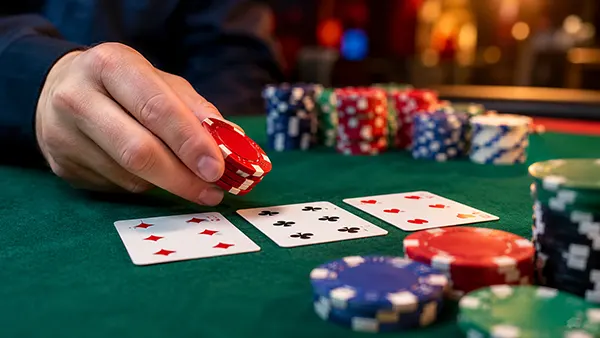
Exploitative probe betting starts with the opponent rather than with a fixed frequency. Against a passive player who bets strong hands on the flop and checks weak ones, the turn can often be attacked more aggressively. Small probes become particularly useful because the objective is not to force strong hands to fold; it is to collect pots from the large number of hands that have effectively surrendered or to charge hands that still have six useful overcard outs. If the same opponent also folds too often after missing a c-bet, bluffing opportunities increase further. Value betting can also become thinner because a passive check-back range may contain second pairs, weak top pairs and pocket pairs that are willing to call one modest bet but would rarely have bet the flop themselves.
Against a stronger or more deceptive opponent, the adjustment should move in the opposite direction. Players who understand flop checking strategies do not automatically weaken their range whenever they skip a c-bet. They may protect the check-back with good top pairs, overpairs and occasional very strong hands, especially on boards where betting three streets is unnecessary. Probing too frequently allows such an opponent to call more often, raise selected turns or check the flop with additional traps. The better response is to choose turns carefully and retain enough checks of your own. You do not need to win every pot immediately after the opponent checks. Allowing some marginal hands to reach the river cheaply protects the checking range and prevents your turn betting range from becoming overloaded with weak bluffs.
Available information should determine how far an adjustment goes. In online games where tracking information is permitted by the operator and local rules, statistics covering missed c-bets and responses to turn leads can provide useful context over a sufficiently large sample. A small sample should not be treated as proof of a habit. In live poker, observed showdowns are often more valuable: remember which hands an opponent checked behind, which hands were bet immediately and whether the player tends to surrender after showing weakness. Stack depth matters as well. A small probe in a deep pot leaves room for several later decisions, while short stacks can make a seemingly harmless turn bet commit a substantial part of the remaining chips. The objective is not maximum aggression but pressure that is justified by the opponent, board and effective stack.
Common Probe-Bet Mistakes and a Simple In-Game Process
The most common mistake is treating the missed c-bet itself as the reason to bet. It is only one piece of evidence. Another frequent error is ignoring the turn card: a player correctly identifies that the flop check looks weak, then bets even when the turn improves many natural check-back hands. Poor sizing causes problems too. Betting very large with medium-strength value can isolate the bettor against stronger hands, while making tiny bets with a polarised range may give draws and bluff-catchers an easy decision. Finally, some players probe too many hands with no useful equity and then continue bluffing rivers simply because they feel committed to the story. Each of these problems comes from acting before identifying which worse hands can call, which better hands might fold and what happens when the opponent continues.
A practical decision can be made with a short sequence of questions. First, what strong hands would this opponent normally have bet on the flop? Second, which medium and weak hands are likely to remain after the check? Third, does the turn card help my range more than that checking range? Fourth, does my actual hand want value, protection, fold equity or a free river? Fifth, what will I do if the opponent calls or raises? If the answers support aggression, a probe bet has a clear purpose. If the reasoning is limited to “they checked, so they must be weak”, checking is usually the more disciplined choice. This process is simple enough to use during a hand and avoids the need to memorise large collections of solver frequencies.
The best probe bettors are not necessarily the players who bet the turn most often. They are the players who recognise when a checked-back flop has created a genuine range weakness and when it has not. On favourable low or connected turns, a small bet can pressure a large part of an opponent’s range while generating value and protection at the same time. On aces, kings and other cards that strengthen likely check-back hands, patience becomes more important, with larger bets reserved for stronger and more carefully selected ranges. Opponent tendencies can then move the strategy further in either direction. This approach keeps the probe bet practical: identify the missing flop bets, evaluate the new turn card, choose a hand that benefits from betting and use a size that matches the objective. The result is controlled aggression rather than an automatic attempt to steal every pot after a missed c-bet.
Latest News
-
Top 5 online slots
This article presents five well-known online slots, each distinguished by its mechanics, special features and gameplay characteristics. …
-
Artificial Intelligence and RTA in Online ...
Artificial intelligence has become a normal part of poker study, but using AI while actually playing is …

-
The Best Time to Play in the Casino: A Gui...
Choosing the right time to play at a casino can significantly influence the gaming experience, although it …
