
How Do Instant Win Games Work and How Are They Different from Regular Slots?
Instant Win games and online slots both offer the chance to win money through randomly determined outcomes, but they work in different ways. Instant Win games usually involve revealing hidden symbols, matching numbers or completing a short activity to see whether a prize has been awarded. Slots use spinning reels, paylines, symbols and sometimes additional bonus features. Although both types of gambling can produce results within seconds, their rules, prize structures and gameplay are not necessarily the same. Understanding these differences helps players interpret winning chances, compare return-to-player percentages and recognise what happens to their stake during each round.
What Are Instant Win Games and How Do They Work?
Instant Win is a general term for games in which the result becomes available almost immediately after a player purchases a ticket or starts a paid round. Unlike traditional lotteries, which require participants to wait for a scheduled draw, these games have no extended waiting period. They include online scratchcards, number-matching games, prize-reveal games and certain arcade-style titles. The exact mechanics depend on the provider. Some resemble physical scratchcards, while others use animations and interactive elements to reveal a randomly selected result. Most require little explanation, as the objective is usually to reveal a specified combination of symbols or numbers.
A typical round begins when the player selects a stake or ticket price. The game then determines the result according to its established rules. In an online scratchcard, for example, the screen might contain nine covered symbols. The player removes the covering to reveal whether three matching symbols appear. Another game might require matching a player’s numbers with a set of winning numbers. If the result satisfies the winning conditions, the corresponding prize is awarded. Otherwise, the stake is lost. Certain titles include extra stages, such as selecting treasure chests or revealing bonus symbols, although these do not necessarily change the underlying result.
One important distinction is that Instant Win games do not all determine outcomes at exactly the same moment. In many online lottery-style games, the result is randomly selected when the ticket is purchased, before the player begins revealing symbols. The Irish National Lottery, for example, explains that its Instant Win outcomes are fixed at purchase. Other casino-style games may generate their results when a round starts or during a defined stage of play. These differences matter because visually interactive features can create the impression that the player’s selections influence the prize, even when the winning amount has already been established.
Random Results, Winning Combinations and Prize Calculations
Random number generators, commonly called RNGs, are used in many digital Instant Win games to produce unpredictable results. The software selects outcomes according to the game’s mathematical rules, which determine how frequently particular prizes can occur. In regulated gambling markets, random outcomes must meet applicable fairness requirements. For example, the UK Gambling Commission requires random results to be acceptably unpredictable and consistent with stated probabilities. This does not mean every player has an equal chance of receiving every prize. A small reward may be relatively common, while the highest advertised prize may have much lower odds.
The way prizes are calculated depends on the individual game. Some Instant Win titles use fixed prize tables, where a particular combination pays a specified amount. Others offer prizes expressed as multiples of the ticket price. For example, a hypothetical £2 game offering a 10x prize would pay £20 in total, representing £18 more than the original stake. A 1x prize would return £2 without producing a profit. Certain lottery-style Instant Win games may also include special top prizes or jackpots. Players should check whether the advertised amount is a fixed monetary prize, a stake multiplier or a jackpot with separate eligibility conditions.
Revealing symbols more slowly, choosing a particular corner of a scratchcard or repeating a favourite selection does not improve the odds when the outcome is already fixed. Likewise, a losing round does not make the next one more likely to win. For games using independent random results, each round follows the same stated probabilities, regardless of previous outcomes. A sequence of losses can occur naturally, even in a game that awards smaller prizes relatively frequently. Players should therefore distinguish between actions that simply reveal a result and genuine game decisions that can affect an outcome, where the published rules explicitly allow such decisions.
How Do Instant Win Games Differ from Traditional Online Slots?
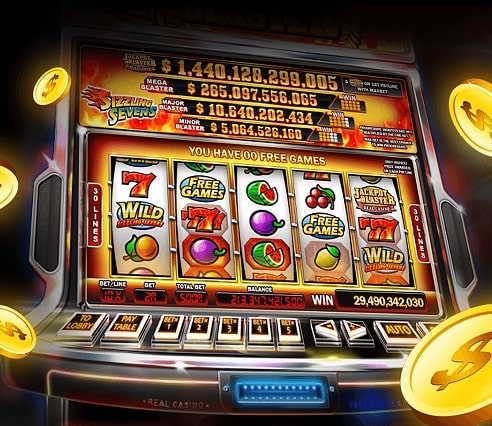
The most visible difference concerns how each game presents its results. Traditional online slots normally feature reels containing symbols that stop in particular positions after a spin. Winning combinations are evaluated using paylines, ways-to-win arrangements or other mechanisms described in the rules. Instant Win games generally replace spinning reels with scratch panels, concealed objects, numbers or short prize-reveal activities. There may be no paylines or reels at all. For example, an Instant Win title could award a prize for matching three identical symbols, while a five-reel slot might require symbols to appear across several positions in a specified arrangement.
Another difference is the structure of a playing session. Slots commonly include several interconnected features, such as wild symbols, scatters, free spins, expanding symbols, multipliers and bonus rounds. Some games use these features to create multiple stages within a single paid spin. Instant Win titles often concentrate on one principal objective, making individual rounds comparatively straightforward. However, this is not a strict division. Modern Instant Win games can contain bonus features, and some simplified slots have very few additional mechanics. Game categories sometimes overlap in appearance, so the rules provide a more reliable distinction than animations or visual themes.
The pace of play can also vary. An Instant Win round may finish after a brief reveal, while a slot spin can include several seconds of reel movement, celebratory animations or bonus sequences. Nevertheless, slots with fast animations and Instant Win games with lengthy reveal stages can take similar amounts of time. Neither category guarantees shorter sessions or lower spending. The important consideration is how much each completed round costs and how often another paid round begins. A £1 game played 40 times involves £40 in total stakes, regardless of whether the results appear through scratching symbols or spinning reels.
RTP, Volatility and the Probability of Winning
Return to Player, or RTP, is one of the principal figures used to describe the theoretical payout of gambling games. It represents the percentage of total stakes that a game is mathematically designed to return as prizes over a very large number of rounds. For example, a game with a 95% RTP has a theoretical return of £95 for every £100 staked across its long-term mathematical model. The remaining 5% represents the theoretical house advantage. This is not a prediction of what one person will receive after spending £100. Actual short-term results can differ considerably because winning outcomes occur randomly.
Neither Instant Win games nor slots have one standard RTP. The percentage depends on the individual title, its rules and sometimes the version offered by the operator. A slot with a 96% RTP has a higher theoretical return than an Instant Win game with a 92% RTP, but another Instant Win title could offer a different percentage. The correct comparison requires checking the figures for the exact games being considered. A difference of four percentage points means a difference of £4 in theoretical return for every £100 wagered across the mathematical model; it does not guarantee that one game will pay £4 more during a particular session.
Volatility describes how winnings may be distributed. A lower-volatility game generally pays smaller amounts more frequently, while a higher-volatility game tends to produce less frequent but potentially larger payouts. Two games can share the same RTP and still behave very differently. For example, one might award regular small prizes, while another concentrates more of its theoretical returns in rare high-value outcomes. The frequency of winning also requires careful interpretation because a prize does not necessarily produce a profit. A £1 ticket that pays £0.50 records a winning result under some game definitions, but the player still loses £0.50 on that round.

What Should Players Know Before Choosing Instant Win Games or Slots?
Before spending money on an Instant Win game, players should check its ticket price, winning conditions, prize table and available information about payout probabilities. Some games display overall winning odds, such as a hypothetical one-in-four chance of receiving any prize. This means the average probability of a prize on an individual round is 25%, not that a win must occur after four attempts. Where results are independent, purchasing additional tickets does not improve the probability attached to any particular ticket. Although buying more tickets increases the number of opportunities to receive a prize, it also increases the total amount spent.
For online slots, the main details include the minimum and maximum stake, RTP, winning arrangements and special features. The paytable explains how symbol combinations are rewarded, while the information screen should describe free spins, multipliers and bonus triggers. Some slots also display a maximum possible win expressed as a multiple of the stake. Such figures describe potential outcomes rather than expected returns. A game advertising a maximum win of 5,000x does not necessarily offer better overall winning chances than one with a lower maximum payout. Extremely large prizes can have very low probabilities.
Bonus eligibility is another practical difference worth checking. Casinos may exclude particular Instant Win titles, scratchcards or other game categories from promotional offers. Some bonuses are restricted to eligible slots, while others apply different wagering contributions to different games. For example, a promotion could count qualifying slot stakes towards a wagering requirement but exclude Instant Win purchases entirely. This is an illustrative situation rather than a universal rule. Players should read the applicable terms before using bonus funds and confirm whether any winnings are subject to withdrawal limits, wagering conditions or other restrictions.
Game Transparency, Spending Limits and Responsible Play
A trustworthy game should provide accessible rules explaining how prizes are awarded and what players can expect from its mathematical design. In Great Britain, licensed operators must comply with relevant UK Gambling Commission requirements, including rules concerning game descriptions, randomness and information about the likelihood of winning. Depending on the game, this information may include RTP, the house edge or stated winning probabilities. Players should also check the operator’s regulatory status because not every gambling website is authorised in every country. A licence issued in one jurisdiction does not automatically permit an operator to provide services elsewhere.
Spending deserves particular attention because repeated small transactions can accumulate quickly. Consider an Instant Win game costing £0.50 per round. Completing 100 rounds means wagering £50 in total, even if individual purchases seem inexpensive. The same calculation applies to slots: 100 spins at £0.50 each also represent £50 in stakes. Winnings returned during a session may be used for additional rounds, causing cumulative wagering to rise beyond the amount originally deposited. Setting a spending limit and a fixed session duration beforehand can help players keep track of their activity. Neither the frequency of small prizes nor the speed of a game makes gambling financially predictable.
The choice between Instant Win games and traditional slots is therefore mainly about preferred gameplay, the available prize structure and the published rules. Instant Win games typically focus on revealing a result through a short activity, whereas slots use reel-based combinations and may offer more elaborate bonus mechanics. Both involve financial risk, both can produce losing streaks, and neither provides a reliable method of generating income. Players who want straightforward prize-reveal mechanics may find Instant Win titles easier to follow, while those interested in paylines and bonus features may prefer slots. In either case, understanding the odds, stakes and potential losses matters more than the visual presentation.
Latest News
-
How Do Instant Win Games Work and How Are ...
Instant Win games and online slots both offer the chance to win money through randomly determined outcomes, …
-
Top 5 online slots
This article presents five well-known online slots, each distinguished by its mechanics, special features and gameplay characteristics. …
-
Artificial Intelligence and RTA in Online ...
Artificial intelligence has become a normal part of poker study, but using AI while actually playing is …