The Role of the Joker in Casino Games
In the constantly evolving world of casino games, few symbols are as iconic or intriguing as the joker. Although many people associate it with traditional card games, its presence has expanded significantly across modern gambling entertainment. Whether appearing on reels or playing cards, the joker can perform a special function capable of changing the course of a game, provided that the rules allow it.
This article explores the visual appearance, origins, functions and uses of the joker in different gaming contexts. It also examines the differences between its role in traditional card decks and its adaptation to modern slot machines, where special symbols may have different functions depending on the design of each game. Understanding these distinctions helps players interpret the rules more accurately and avoid confusion between elements that look similar but do not necessarily work in the same way.
What Does the Joker Look Like?
The joker is usually depicted as an eccentric character wearing a colourful jester’s costume, often featuring bells attached to the hat. This theatrical and vibrant appearance makes it easily recognisable in many card decks and digital gaming interfaces. While some designs draw inspiration from medieval themes, others adopt darker or more mysterious interpretations depending on the style of the game. However, there is no universal representation of the joker, as playing card manufacturers may use entirely different illustrations to identify this special card.
In digital casino games, the joker’s appearance can vary considerably depending on the visual style and theme chosen by the developers. Some games feature animated characters with exaggerated facial expressions, while others favour more restrained and minimalist interpretations. Certain versions even abandon the human figure altogether, replacing it with masks, hats or graphic elements associated with jesters. These visual differences do not determine the symbol’s value, as its function depends entirely on the specific rules of the game.
Where Did the Joker Originate?
The joker is a relatively modern addition to the traditional deck of playing cards, with its origins dating back to nineteenth-century America. Its development is closely associated with Euchre, a trick-taking card game in which certain jacks held particular importance. Over time, an additional card emerged, known as the Best Bower or Imperial Bower, which could outrank the usual trump cards. This innovation is considered the historical predecessor of the modern joker, which subsequently began appearing in other types of card games.
Unlike traditional playing cards, the joker does not belong to any of the four standard suits. This characteristic made it possible to assign special functions to the card according to the rules of individual games. However, its value has never been entirely consistent across different games. While some variations treat it as a substitute for other cards, others assign it a specific rank or exclude it altogether. For this reason, players should not assume that every card game uses the joker in the same way.
As card games became more widespread and modern casinos developed, the joker found new applications in certain game variations and graphic design. Its image became a recognisable way of representing surprise, unexpected developments and special features. The evolution of electronic gaming subsequently made it possible to reinterpret these characteristics through animations, interactive symbols and additional game functions. However, these adaptations do not always maintain a direct connection with the original rules of Euchre.
How Is the Joker Used?
One of the joker’s main functions in card games is to act as a substitute for other cards. In certain poker variations, for example, it can be used to complete combinations that would otherwise be impossible with the cards available. However, it is important to distinguish these variations from conventional poker, as popular games such as Texas Hold’em do not include jokers under their standard rules. Furthermore, some variations restrict the joker’s substitution abilities, meaning that its presence does not necessarily allow it to represent any card.
In other card games, the joker can perform entirely different functions. In certain versions of Canasta, it serves as a special card used to form combinations, while in some trick-taking games, it may occupy a higher position in the card ranking system. These differences demonstrate that its usefulness depends not only on the printed illustration but also on the scoring system and conditions established for each game. Before using a joker, it is essential to understand the applicable restrictions and determine how it affects the formation of valid combinations.
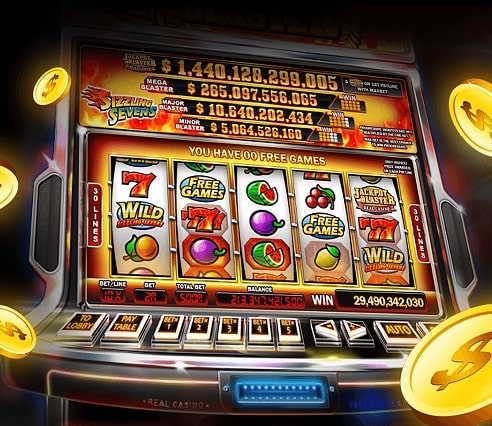
Outside traditional card games, jokers also appear as decorative characters and visual identity elements in various entertainment products associated with casinos. Their appearance, traditionally linked to humour and unpredictability, allows designers to create easily recognisable visuals. In slot machines, for example, a character inspired by the joker may appear as a regular symbol, a special symbol or simply part of the game’s decoration, without its appearance necessarily indicating a particular function.
Additionally, some slot machines incorporate special symbols associated with multipliers, additional rounds or other distinctive features. Although these elements may feature illustrations of jokers, their effects depend on the programming and rules of the particular game. It is important to consult the paytable and available instructions before interpreting any symbol as a prize trigger, as an eye-catching illustration does not guarantee a bonus feature or independently alter the probability of obtaining a winning combination.

Do Slot Machines Include Jokers?
Yes, some slot machines incorporate jokers as part of their themes or gameplay mechanics. In many titles, this function is associated with Wild symbols, which can substitute for certain other symbols to complete winning combinations. However, a Wild symbol does not necessarily have to depict a joker, and similarly, a jester-like character does not always function as a substitute. The rules may establish exceptions for special symbols, such as Scatters, which generally serve independent functions.
There are also slot machines whose themes revolve around jesters and characters inspired by the joker. These games may combine colourful illustrations with features such as expanding Wilds, multipliers or free spins rounds, depending on the characteristics of each title. For example, an expanding Wild may occupy multiple positions on a reel when certain conditions are met, whereas other substitution symbols only operate in the position where they appear. This distinction is important because it directly influences how valid winning combinations are formed.
To interpret these functions correctly, players should review the paytable of each slot machine. This explains which symbols can be substituted, which reels may display Wilds and whether any restrictions apply during special rounds. It is also important to remember that the presence of a Wild does not guarantee a payout: results depend on the game’s mathematical mechanics and the combinations obtained. Understanding these rules helps distinguish between an attractive visual feature and a function that genuinely contributes to the calculation of payouts.
Conclusion
The joker is much more than an unusual character; it is an adaptable element within certain card games and a recognisable figure in casino-related entertainment. From its origins in nineteenth-century Euchre to its modern interpretations in digital games, its presence has evolved alongside different forms of gaming. Its functions can vary considerably, making knowledge of the specific rules essential for understanding its actual role.
In card games, the joker can change the possibilities for forming certain combinations, provided that the rules permit its use. In slot machines, its visual representation may be associated with Wild symbols or other features, although there is no automatic equivalence between these functions. This diversity explains why the joker remains a recognisable figure across different forms of entertainment. Beyond its appearance, what determines its importance is the specific function it performs within each game.
Latest News
-
The Role of the Joker in Casino Games
In the constantly evolving world of casino games, few symbols are as iconic or intriguing as the …
-
How Do Instant Win Games Work and How Are ...
Instant Win games and online slots both offer the chance to win money through randomly determined outcomes, …
-
Top 5 online slots
This article presents five well-known online slots, each distinguished by its mechanics, special features and gameplay characteristics. …